
Call: 08045804767
 Send Inquiry
 Send Inquiry
Inverted Microscope
Inverted Microscope Specification
- Measurement Range
- Suitable for specimens on slides and culture dishes
- Display Type
- No display (direct optical view)
- Frequency
- 50/60 Hz
- Storage Instructions
- Store in clean, dry place, cover to prevent dust
- Usage Type
- Laboratory, Academic, Research
- Function
- Microscopic observation and imaging
- Instruments Type
- Scientific Laboratory Instrument
- Equipment Type
- Inverted Microscope
- Material
- Metal and Optical Glass
- Condition
- New
- Technology
- Optical
- Portable
- No
- Wall Mounted
- No
- Magnification Power
- 40x, 100x, 400x (up to 1000x with oil immersion)
- Real-Time Operation
- Yes
- Noise Level
- Silent
- Operating Type
- Manual
- Use
- Cell cultures, Biological Research, Laboratory
- Power Source
- Electric (AC Powered)
- Voltage
- 220V / 110V AC
- Dimension (L*W*H)
- Approx. 50 x 25 x 40 cm
- Weight
- Approx. 15 kg
- Color
- White with Black accents
- Objective Lenses
- 4x, 10x, 40x, 100x Oil Immersion Achromatic Objectives
- Maintenance
- Routine cleaning and calibration required
- Condenser
- Long working distance condenser, N.A. 0.30 with iris diaphragm
- Focusing System
- Coarse and fine coaxial adjustment
- Mechanical Stage Size
- 160 x 180 mm
- Head Type
- Trinocular, 360 rotatable
- Lighting Adjustment
- Rheostat for intensity control
- Accessories
- Dust cover, power cord, instruction manual, immersion oil
- Eyepiece
- Wide field 10x/18mm
- Sample Compatibility
- Petri dishes, cell culture flasks, glass slides
Inverted Microscope Trade Information
- Payment Terms
- Cheque
- Delivery Time
- Months
- Packaging Details
- Wooden Boxes
- Main Export Market(s)
- Australia, Eastern Europe, Middle East, Africa, Central America, South America, Western Europe, Asia, North America
About Inverted Microscope
We are a sole proprietor firm, presently engaged in trading and supplying of a qualitative range of Inverted Microscope. These microscopes are used in research institutions, factories and institutions for studying metallography and metal physics. Our Inverted Microscope is made and designed by our vendors as per the set industry norms using supreme grade materials. In addition, we are capable of customizing these microscopes as per the exact needs of the clients.
Features:
- Lightweight
- Accurate reading
- Compact design
Further Details:
Manual encoded or semi-motorized options let the end user easily configure a system with a variety of component combinationsnow or later. Available as a one-deck system with ergonomic low stage height or as a two-deck system with additional expansion capabilities. Both provide the ability to perform a multitude of imaging techniques, ranging from long term time-lapse imaging and other demanding cutting edge techniques to casual documentation. Innovative new features include:
High speed filter wheels, shutters and light sourcesallows for the design of a system to meet high speed acquisition requirements.
The Olympus U-RTC, Real Time Controller allows for microsecond timing accuracy with high speed hardware.
The New fly-eye fluorescence illuminator produces uniform fluorescence illumination across the field of view even when using new large format cameras.
The Ultrasonic Motorized, Encoded Stage uses Olympus ultrasonic motor stage technology providing precise and repeatable movement with a low-profile, noise-free design.
Superior Imaging for Cell Culture Applications
Utilizing achromatic objectives and oil immersion technology, this inverted microscope delivers crisp, high-resolution images essential in cell culture and biological research. The 360 rotatable trinocular head enables straightforward documentation and observation from multiple angles, making it ideal for academic laboratories and research teams handling various specimen types.
Efficient and Flexible Sample Handling
The large mechanical stage (160 x 180 mm) is designed to hold petri dishes, cell culture flasks, and standard glass slides, affording flexibility for different specimen formats. Its long working distance condenser and precise coarse and fine focusing adjustment allow for fast, accurate sample positioning and imaging, maximizing workflow and minimizing handling errors.
Reliable Operation with Convenient Maintenance
Built from robust metal and optical glass, this microscope ensures durability and stability. Maintenance is simpleroutine cleaning and calibration maintain optimal performance. The included dust cover protects sensitive optical components, and the oil immersion feature enhances magnification capabilities up to 1000x, supporting detailed microscopic analysis.
FAQs of Inverted Microscope:
Q: How do I adjust the lighting intensity on this inverted microscope?
A: Lighting intensity is adjusted using the built-in rheostat, allowing precise control over illumination to suit different specimens and observation requirements.Q: What types of samples can be observed with this microscope?
A: This microscope is compatible with petri dishes, cell culture flasks, and standard glass slides, making it highly versatile for biological research and laboratory use.Q: When should I use the 100x oil immersion objective?
A: The 100x oil immersion objective is recommended when you need to observe very fine cellular details at high magnification. Apply a drop of immersion oil between the slide and objective to enhance clarity.Q: Where should this microscope be installed for optimal performance?
A: For best results, set up the microscope in a clean, dry laboratory environment with stable electric power and minimal vibrations, ensuring accurate microscopic observations.Q: What is the recommended process for routine maintenance?
A: Routine maintenance includes regular cleaning of optical surfaces with lens paper, calibration of mechanical components, and covering the microscope with the provided dust cover when not in use.Q: How does the coarse and fine coaxial adjustment improve usage?
A: The coarse and fine coaxial focusing system lets you achieve rapid, then precise, focus adjustments, making it efficient for both scanning and detailed imaging of specimens.Q: What are the main benefits of using a trinocular head?
A: A trinocular head allows direct viewing and simultaneous imaging or recording, facilitating documentation and sharing of observations in academic and research settings.
Tell us about your requirement

Price:
Quantity
Select Unit
- 50
- 100
- 200
- 250
- 500
- 1000+
Additional detail
Mobile number
Email

More Products in Infertility Care Category
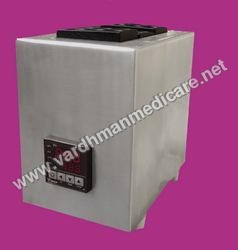
Klenzaids Test Tube Warmer
Operating Type : Automatic
Weight : Approx. 2 kg
Portable : Yes
Condition : New
Noise Level : Silent Operation
Wall Mounted : No
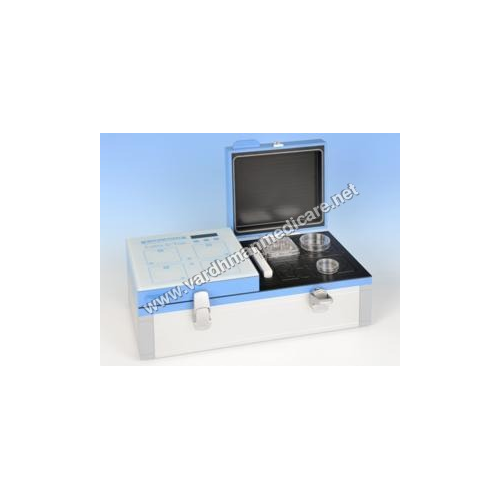
Benchtop Incubator
Operating Type : Automatic
Weight : Approx. 35 kg
Portable : Yes
Condition : New
Noise Level : < 60 dB
Wall Mounted : No

Cyro Freezing
Operating Type : Automatic
Weight : 45 kg
Portable : No
Condition : New
Noise Level : Low
Wall Mounted : No

Trigas Incubator Heracell
Operating Type : Automatic
Weight : Approx. 96 Kg
Portable : No
Condition : New
Noise Level : Low
Wall Mounted : No

Contact Details
GST : 07AACCV0476A1ZP
- 2ND FLOOR, L-90/164, STREET NO. 7, MAHIPALPUR EXTN,New Delhi - 110037, India
- Phone :08045804767
 Send Inquiry
Developed and Managed by Infocom Network Private Limited.
